The Cost of “Cheap”: Why Substandard Inverters are the Leading Cause of Solar Fires
In the quest for energy independence in Nigeria, the allure of the “bargain” is strong. With the skyrocketing prices of petrol and the instability of the national grid, thousands of homeowners are rushing to markets like Alaba or Mushin to “pick up” a solar inverter at a fraction of the price offered by professional engineering firms.
But there is a silent, glowing danger lurking in those bargains. Across the country, solar-related house fires are on the rise. While most people blame “bad luck” or “the sun,” the reality is far more technical and far more preventable. At the heart of most solar disasters lies one specific component: The Substandard Inverter.
1. The Inverter: The “Brain” That Never Sleeps
To understand the danger, you must understand what an inverter actually does. Your solar panels produce Direct Current (DC), but your home appliances—your TV, fridge, and lights—run on Alternating Current (AC). The inverter is the “brain” that converts DC to AC.
This process generates heat. A high-quality inverter is designed to dissipate this heat through advanced cooling fins, high-speed fans, and premium copper internal components. A substandard inverter, however, is built with “shortcuts.” When a cheap inverter struggles to convert power for a heavy load (like your AC or pumping machine), it doesn’t just stop working—it begins to melt.
2. Why “Cheap” Inverters Catch Fire: The Technical Reality
The Aluminum vs. Copper Debate
Inside every inverter is a transformer. High-end manufacturers use pure copper wiring because copper is an excellent conductor of electricity and handles heat exceptionally well. Substandard manufacturers use aluminum wiring coated in a thin layer of copper (known as Copper-Clad Aluminum or CCA).
Aluminum has a much higher resistance than copper. High resistance equals high heat. When you pull a heavy load through aluminum wiring, the wire can reach temperatures exceeding 200°C, melting the surrounding plastic housing and igniting nearby materials.
The “Modified Sine Wave” Trap
Cheap inverters often use “Modified Sine Wave” technology rather than “Pure Sine Wave.” Modified sine waves are “choppy” and unstable. Not only does this damage your sensitive electronics (like your MacBook or Smart TV), but it also causes the inverter’s internal capacitors to work overtime. These capacitors can eventually bulge and explode, creating an electrical arc—the first spark of a house fire.
3. The Absence of Rapid Shutdown and Protection Circuits
A professional-grade inverter is packed with safety protocols. If it detects a short circuit, an over-voltage, or a thermal spike, it shuts down in milliseconds to protect the house.
Substandard inverters often lack these sophisticated protection circuits. They are designed to “keep running at all costs” to satisfy the user. This means that if there is a fault in your wiring, the cheap inverter will keep pumping electricity into the fault until the cables glow red-hot and ignite.
4. The Danger of “Fake” Capacity Labels
In the open market, it is common to see an inverter labeled as “5kVA” that barely has the internal components of a 2kVA machine. When a homeowner loads this “5kVA” machine with appliances based on the label, they are unknowingly redlining the machine.
Operating any electrical device at 110% capacity for hours on end is a guaranteed recipe for a “thermal event.” A professional load assessment—like the one we provide at [Client Name]—prevents this by ensuring your inverter capacity matches your peak surge needs with a safety margin.
5. The “Professional” Difference: More Than Just a Box
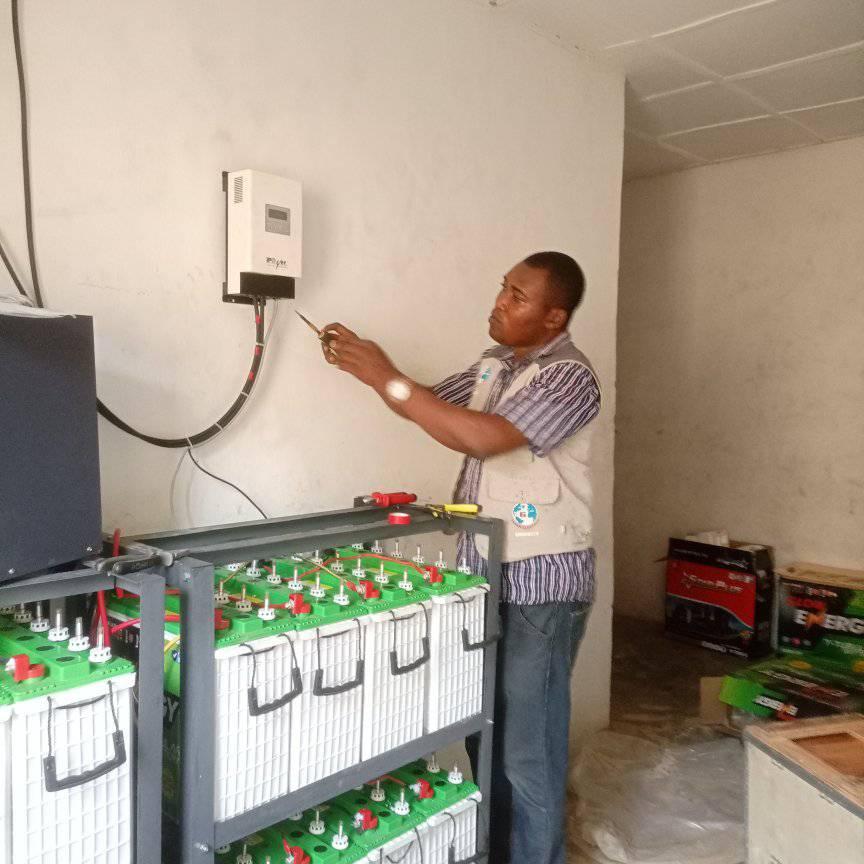
When you pay for a professional solar consultation, you aren’t just buying an inverter; you are buying an engineered system. A professional installation includes:
- Correct Cable Sizing: Ensuring the “veins” of your system can handle the “blood” (current) without overheating.
- DC Surge Protection: Specialized breakers that act as a firewall between your roof and your living room.
- Ventilation Standards: Ensuring the inverter is mounted in a space where it can “breathe,” preventing heat buildup.
6. How to Spot a “Fire-Prone” Inverter Before You Buy
If you are currently shopping for solar, look for these warning signs:
- Suspicous Weight: If a high-capacity inverter feels as light as a DVD player, it lacks the heavy copper transformers needed for safety.
- No Brand Traceability: If you cannot find a global website or a certified local distributor for the brand, it is likely a “ghost brand” with no safety certifications.
- No “Pure Sine Wave” Certification: If it doesn’t explicitly state “Pure Sine Wave,” do not connect it to your home.
Conclusion: Your Safety is Worth More Than a Discount
The price difference between a substandard inverter and a professional-grade power system is often less than the cost of replacing a single burnt-out refrigerator—and it is infinitely less than the cost of a lost home.
Don’t let your quest for 24/7 power turn into a nightmare. Solar is the future, but only when it is installed with the respect that high-voltage electricity demands.
Is Your Home Solar-Safe?
Before you switch on that “market deal,” let the experts at Goodwill Solarge give you a Free Solar Safety & Load Assessment. We’ll audit your equipment, check your wiring, and ensure your path to energy independence is a safe one. Contact Us today